
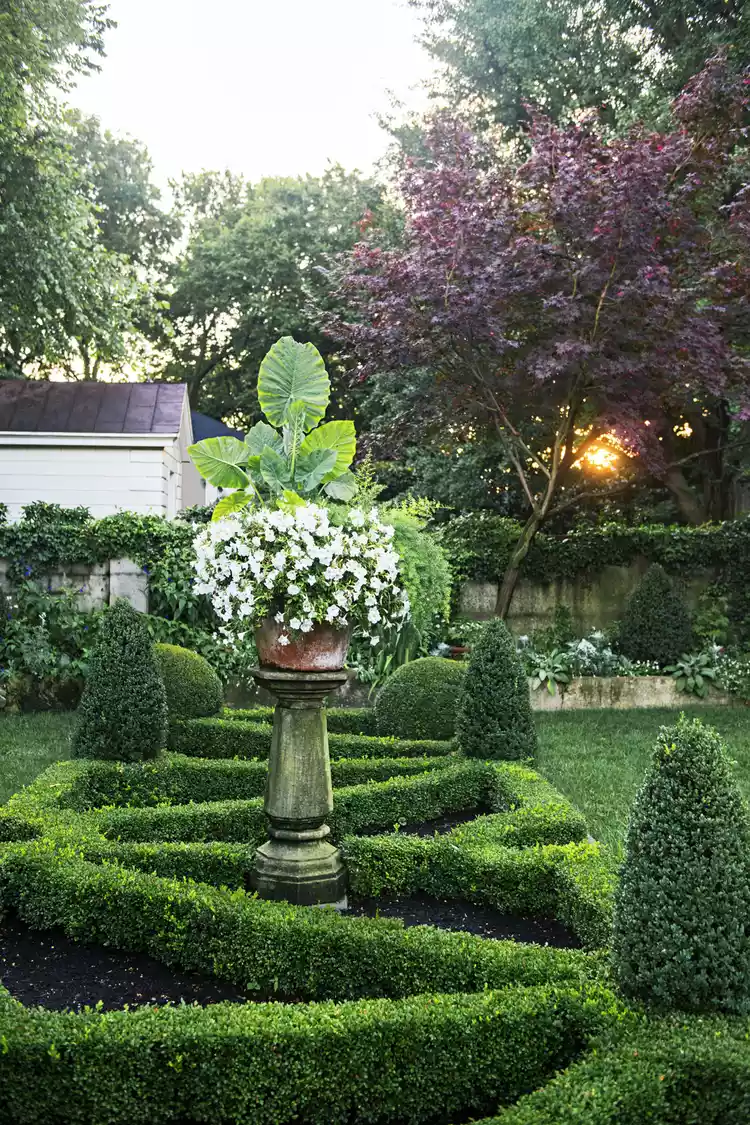
Boxwood has a long history in garden design, from ancient Rome to modern-day suburbia. A tidy boxwood hedge is a staple in traditional formal gardens, but landscape designers are also using the evergreen in fresh ways. Paired with ornamental grasses and flowering perennials, these elegant shrubs can look informal and entirely new. Another recent shift in the world of boxwood (Buxus spp.) is in the approach to care. Rather than shearing the shrub into any shape you please, growers now recommend starting with a variety that naturally grows into your desired shape and size, and then pruning selectively as it grows. This technique keeps your plant healthier, ultimately making it less susceptible to blight, a fungus that can wipe out the shrub. If you choose blight-tolerant varieties and treat them right, you can look forward to a long, happy life for the boxwood in your garden.
How to Grow Boxwood
Landscape architect, boxwood grower, and former director of the American Boxwood Society, Andrea Filippone shares her essential care tips.
1. Conditions
Boxwood thrives in full sun to part shade. Those in full shade won't grow as vigorously. Plants in full sun, particularly in hot inland areas, can be at risk of scorching. Hardiness depends on variety, but most grow in Zones 5-9.
2. Drainage
Plant in loose, quick-draining soil. Boxwood don't like soggy soil. Amend heavy clay soils with sand before planting.
3. Spacing
Spacing needs vary depending on mature size of the cultivar. Avoid planting too tightly, which crowds their shallow roots and prevents air circulation. Check the plant tags and err on the side of more room.
4. Water
After planting and for the first couple of months while your plant gets established, water one to two times per week. After that, keep an eye on the plant and the soil, Filippone says. In general, aim to water the root ball well, then allow soil to dry out between waterings. Keep potted boxwood on drip irrigation, if possible, because soil can dry out quickly.
5. Fertilizer
Filippone recommends using only organic fertilizers, such as compost or compost tea, to create healthy plants.
How to Prune Boxwood
According to Filippone, less is more when it comes to best pruning practices for boxwood. Limit pruning to only twice a year: once in the summer up until August and again in December (or wait until spring in cold-winter climates).
Boxwood push new growth where they're cut, Filippone explains, so shearing (clipping only the outermost layer of leaves) leads to a dense outer layer that blocks light and air from reaching the center. That dark environment encourages pests and disease. Instead, she recommends gently and selectively clipping a few inches of growth by hand with pruning shears to control size and shape. Next, make selective cuts with the pruners into the outer six inches to allow more light and air to reach the center: Angle the pruners into the shrub, making cuts where the boxwood begins branching. Remove the clipped branches as well as any dead twigs.
Andrea Filippone
Boxwood are my building blocks for design, allowing me to create structure and outdoor rooms—that won't be devoured by deer!
Dealing with Boxwood Blight
Boxwood blight can be devastating. It starts as dark spots on leaves, which then brown and fall off the branches. The disease can quickly spread to nearby boxwood. To prevent it, avoid creating the moist conditions the blight fungus thrives in by not watering overhead and not shearing. Plant only cultivars known to be less susceptible to blight, and avoid the especially problematic 'Suffruticosa' English boxwood. To prevent potential spread between plants, dip pruners into a 10-percent bleach solution after use on each plant (add one part bleach to nine parts water). Dispose of infected plants and the soil around it in trash bags; don't compost.
Garden Design Ideas for Boxwood
Hedgers and Edgers
A series of small boxwood balls forms a cottage-style hedge around raised beds in this kitchen garden by garden designer Elizabeth Everdell.
Container Accents
Keep it simple with topiary boxwood in classic terra-cotta containers. In a garden by Denler Hobart Gardens, cones and globes sit side by side to dress up a stone patio.
Tip: Use tall potted boxwood to frame a stairway or path.
Perennial Backdrop
A double layer of boxwood hedges in this Denler Hobart-designed garden give structure to this border of irises, roses, and lady's mantle.
Architectural Shapes
Strong pyramidal forms softened by grassy perennials created an unexpected foundation planting by Jon Carloftis.