
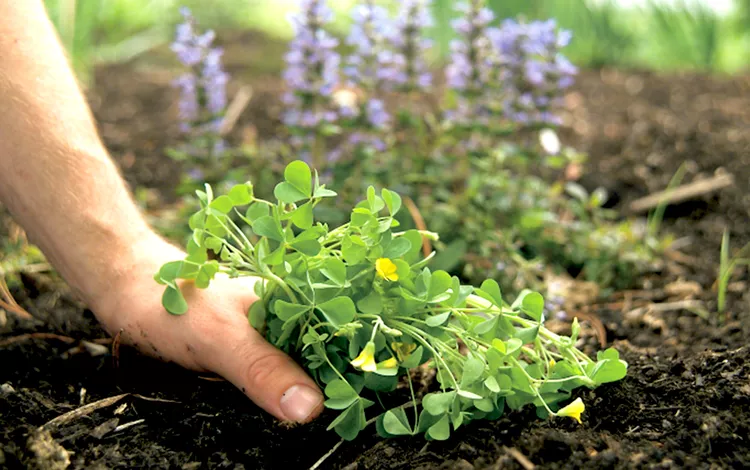
It's hard to have compassion for weeds, but they're just plants growing in places where they're not wanted (some weeds are even edible). To tackle them effectively without resorting to toxic chemicals, use the hard-hitting strategies below, depending on the different weed types you're likely to encounter. Plus, get our recommendations for the best weeding tools (like you'll find in this Better Homes & Gardens Stainless Steel Gardening Tool Set, $40, Walmart) for the job.
Types of Weeds
Some weeds produce enormous quantities of seeds, and while they're easy to pull or hoe, new ones quickly appear to take their place. Other types of weeds have the ability to sprout new plants from small pieces of root or stem left behind after you pull them. And then you have wily weeds like the mighty dandelion, which combines the best (or worst) of both types. Once you get to know all these types of weeds, you'll be able to use the most effective techniques for keeping them under control. Before you tackle any weeds be sure to protect your hands with a pair of heavy-duty garden gloves (such as the Better Homes & Gardens Green River & Blue Cove Gardening Gloves, $13, Walmart).
Annuals
Pretty much all weeds make seeds (which is one way they can spread), but annuals such as galinsoga and lamb's quarters only have a year to live. They can be trickier than other weeds because they'll cover the ground with seeds. To get rid of them, through early spring and summer, frequently draw a hoe through the soil to disrupt tiny germinating seeds. If you can, dig or pull annual weeds before they have the chance to develop seeds. If you can't pull them without damaging other garden plants, cut the stems at or below the soil to prevent them from regrowing.
Taprooted
The key to fighting taproots is to get all of their long, strong roots out of the soil. Perennials such as dandelions can regrow from any part of their root left in the soil, while biennials such as bull thistle will die after blooming in their second year. Plunge a straight, pointed trowel or dandelion digger down right next to the root to help pry it out. You can also use a flat garden spade for large, deep taproots.
Rhizomatics
These weeds can be hard to control because they have horizontal stems called rhizomes that resprout when they're cut. For weeds like stinging nettle, witchgrass, and quackgrass, use a trowel, claw, or spading fork to loosen the soil around these weeds. The rhizomes will be easier to pull out and less likely to break and leave pieces behind that can resprout.
Toughies
These weeds, including chickweed, plantain, and dock, like to grow in hard, compacted soil. It takes strength to pull them out, so an oscillating stirrup or scuffle hoe is your best friend for dealing with them. Its sharp, horizontal blade swings back and forth as you work the soil, giving it even more power. This will help loosen up the soil around these stubborn weeds, making them easier to tug out.
Monsters
Aggressive weeds, including Japanese knotweed and bindweed, can feel impossible to eliminate because of their deep, vigorous roots. If your yard gets taken over by them (or any other weed), try starving them of light. Move any plants you want to keep to another area, then closely mow the weedy part of your yard. Cover the weeds with sturdy tarps and weigh them down, then wait until all the plants underneath are dead.
Weeding Tips and Techniques
Spreading a 2-inch-thick layer of mulch over the soil in planting beds helps prevent seeds from germinating and makes those that emerge easier to remove. The best time to tackle most weeds is right after irrigating or a rainfall. It's easiest to pull or dig them out in their entirety when the ground is soft. To avoid feeling overwhelmed, focus on a small space every day and rotate throughout your garden. It's certainly easier to face weed control in small increments than it is to face weeding your entire yard all at once.
After weeds are pulled or dug out, you can leave them on the ground to shrivel (best to do on a sunny day) so they are lighter to haul away later. Some extra vigorous garden weeds can grow back or go to seed if left where they are, so make sure to completely remove them once you head inside again. Because most home compost piles don't get hot enough to kill seeds, it's best to discard weeds in your regular trash or with other yard waste.
The Best Weeding Tools
Your hands are often the best all-purpose weeding tools, but when you need a little more power, try one of these.
- Cutting and scraping tools work best for sliding behind and beneath weeds to chop stems from roots. Use angled triangular blades to weed cracks and crevices.
- Fishtail or taproot weeders have a V-shape tip on the end of a long tool that you slip on either side of a weed stem (such as a dandelion) to pry the root from the soil.
- Soil knives (also called hori-horis) are versatile tools that can dig holes, divide perennials, dig taproot weeds, and scrape weed seedlings from the soil. Keep it sharp for the best results.
- Oscillating hoes have sharp-edge stirrup-shape blades and long handles. Eradicate weeds by moving the blade back and forth in the soil. These work well in a vegetable garden when you want to sever young weeds between rows.