
• HOME
  • Container Gardens
  • Edible Gardening
  • Caring for Your Yard
  • Pest & Problem Fixes
  • Trees, Shrubs & Vines
  • Gardening Routine
  • Terms of Use
  • About Us
  • Privacy Policy
classlw.topclasslw.top
  • HOME
  • Container Gardens
  • Edible Gardening
  • Caring for Your Yard
  • Pest & Problem Fixes
  • Trees, Shrubs & Vines
  • Gardening Routine
classlw.top classlw.top
classlw.top » Edible Gardening » How to Harvest Rosemary for Its Fragrant Leaves
Edible Gardening

How to Harvest Rosemary for Its Fragrant Leaves

37.4K
3K
508
How to Harvest Rosemary for Its Fragrant Leaves

Rosemary plants are commonly grown in herb gardens or pots and are harvested for their aromatic leaves and sultry flavor. But if you don’t know how to harvest rosemary, you may accidentally damage your plants while harvesting and make your herbs less productive. Learn how to avoid common gardening pitfalls and grow healthier rosemary plants with these simple harvesting tips!

When to Harvest Rosemary

Rosemary can be harvested little by little or it can be gathered in larger quantities for freezing or drying. Many growers harvest rosemary stems when pruning their plants, but you can harvest rosemary from your garden as needed for recipes too. If you want to get the best flavor, pick rosemary in spring and summer immediately before the plant flowers and, if possible, do your harvesting in the early morning when rosemary leaves contain the highest concentration of volatile oils.

Compared to many common herbs, rosemary is not particularly cold hardy and it only grows as a perennial in USDA growing zones 6 and up. In warm areas, rosemary is often harvested year round, but in colder areas these edible plants are usually picked in smaller quantities in spring and summer and then the remainder of the plant is harvested in fall before winter sets in. However, if you live in a cold spot and want to harvest rosemary year round, you can move your plants indoors and keep them as winter houseplants.

Regularly harvesting rosemary from herb gardens encourages plants to produce more leaves and stems and a bushier growth habit. But if you’re growing new rosemary plants from seeds or cuttings, you’ll need to wait until your plants are at least 6 to 8 inches tall before gathering your first harvest. These herbs are slow growers and they can take a year or more to reach a harvestable size if they’re grown from seed, but you can harvest earlier if you grow rosemary from cuttings or nursery starts.

How to Harvest Rosemary

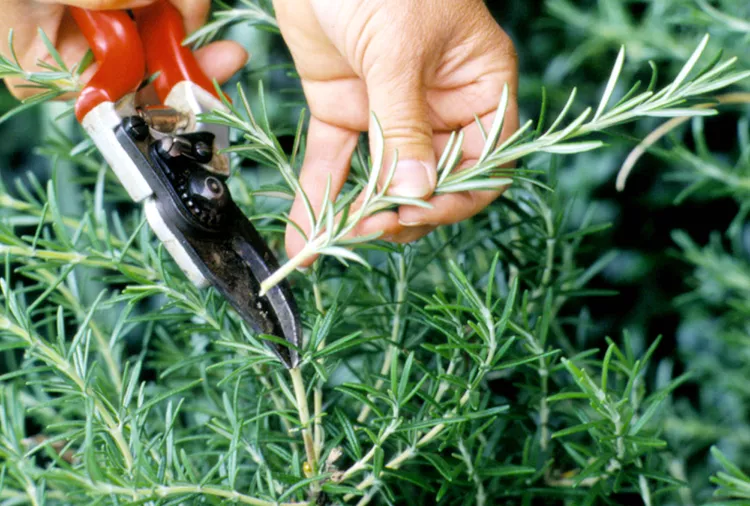
Some herbs can be picked with your fingers, but it’s best to harvest rosemary from culinary gardens with sterilized scissors or pruners to avoid damaging rosemary stems. It’s also important to know that rosemary produces both tender, light green stems and woody stems, which are both technically edible. However, it’s best to avoid cutting rosemary back into the woody sections of the plant as this can cause unsightly bald patches of stems that won’t produce leaves.

To harvest rosemary stems, clip off the top 2 to 3 inches of new, flexible growth from your rosemary plants until you harvest the amount of rosemary you need. Make your harvesting cuts immediately above a set of rosemary leaves to encourage plants to branch and grow, and work your way around the plant, harvesting and clipping as you go, to give your rosemary a uniform look.

If you have a large, established rosemary plant, you can take small daily harvests of rosemary stems, but smaller rosemary plants should be harvested more sparingly. To avoid overharvesting, never pick more than 1/3 of your plant’s stems at once and give your rosemary a few weeks to recover if you take a sizeable harvest. That said, if you’re growing rosemary as an annual, you can clip the entire plant off at the soil line before winter arrives.

How to Store Rosemary

Fresh rosemary can be stored in the fridge bouquet-style for a week or two by placing cut stems in a glass filled with 1 inch of water. Cover the top of the rosemary with a plastic baggie to boost humidity levels and replace the water daily to keep everything fresh. If you don’t have the room in your fridge to store rosemary in this way, you can also wrap rosemary in a dry paper towel and store it in a plastic baggie in your crisper drawer.

If you want to keep rosemary fresh even longer, you can freeze rosemary stems whole or chop them and freeze them in ice cube trays with oil or water. Or you can dry rosemary in a food dehydrator or hang dry your herbs in loose bundles in a warm, dry place with good air flow.

Once the leaves are thoroughly dry and crispy, strip them from the plant stems and store them in airtight containers in a warm, dry place for up to one year. You can use a coffee mill or mortar and pestle to grind dried rosemary into a powder. But if you want to get the best flavor out of your herbs, it’s best to grind them up just before you use them.

Frequently Asked Questions

  • How do you harvest rosemary so it keeps growing?

    If you want rosemary plants to keep growing in your garden, harvest your plants regularly but never pick more than 1/3 of your plant’s stems at once. Limit your harvest to tender, new growth and avoid harvesting woody rosemary stems. Cutting rosemary plants back into their woody sections can make them stop growing!

  • Should I wash rosemary before storing?

    No, it’s best to avoid washing rosemary before storing it in the fridge. Extra moisture can cause rosemary to develop mold and it also makes dehydrating rosemary leaves more difficult. You’ll have better luck if you wash rosemary just before you use it.

  • What can I do with fresh rosemary from the garden?

    Rosemary is often used to flavor poultry and meat dishes, but rosemary stems can also be used as kabob skewers. For even more options, rosemary makes an interesting addition to cocktails and it’s a staple ingredient in Mediterranean cuisine. If you want to get even more creative with your herbs, you can also use rosemary leaves in handmade soaps and potpourri mixes.

Related Posts

15.2K
1.4K
601

How to Plant Balled-and-Burlapped Trees & Shrubs

45.6K
1.4K
205

How to Plant and Grow Sky Vine

1K
61
22

10 Native Alternatives to Invasive Plants Growing in Your Garden

27.8K
1.9K
622

Your Seasonal Lawn-Care Schedule for the Pacific Northwest

43.8K
437
170

Is Electroculture Gardening the Next Great Thing in Plant Care?

2.2K
43
20

8 Beneficial Insects to Know (Plus How to Attract Them to Your Garden)

11.2K
895
375

How to Make an Adorable Broken Pot Fairy Garden in 4 Easy Steps

37.7K
1.1K
554

25 Gorgeous Hanging Basket Ideas to Dress Up Your Yard

39.5K
4K
592

15 Best Fall Flowers for Pots to Enjoy Some Late-Season Color

12.2K
1.2K
304

10 Front Porch Planter Ideas to Drape Your Entryway in Color

32.8K
1.3K
419

8 Steps to Fix a Lawn That’s All Weeds and Bare Patches

21.2K
424
195

How to Use a Compost Tumbler to Turn Scraps Into Garden Nutrients

5.5K
110
48

5 Best Ways to Water Raised Garden Beds of All Sizes Correctly

21.9K
1.5K
566

How to Get Rid of Crabgrass and Replace It with Actual Grass

46.5K
3.3K
520

8 Tips for Getting Rid of Squash Bugs Naturally Before They Devour Your Plants

23.9K
2.2K
581

How Can I Get Rid of Wiregrass?

34.9K
1.7K
575

2 Plants that Repel Ticks and Fleas from Your Yard

23.8K
951
247

10 Best Companion Plants for Kale

6.4K
386
108

6 Tips for Pruning Raspberries to Boost Your Harvest

27.6K
1.7K
794

How to Plant and Grow Cumin

How to Plant Balled-and-Burlapped Trees & Shrubs
How to Plant and Grow Sky Vine
10 Native Alternatives to Invasive Plants Growing in Your Garden
Your Seasonal Lawn-Care Schedule for the Pacific Northwest
Is Electroculture Gardening the Next Great Thing in Plant Care?
8 Beneficial Insects to Know (Plus How to Attract Them to Your Garden)
How to Make an Adorable Broken Pot Fairy Garden in 4 Easy Steps
25 Gorgeous Hanging Basket Ideas to Dress Up Your Yard
15 Best Fall Flowers for Pots to Enjoy Some Late-Season Color
10 Front Porch Planter Ideas to Drape Your Entryway in Color
8 Steps to Fix a Lawn That’s All Weeds and Bare Patches
How to Use a Compost Tumbler to Turn Scraps Into Garden Nutrients
5 Best Ways to Water Raised Garden Beds of All Sizes Correctly
How to Get Rid of Crabgrass and Replace It with Actual Grass
8 Tips for Getting Rid of Squash Bugs Naturally Before They Devour Your Plants
How Can I Get Rid of Wiregrass?
2 Plants that Repel Ticks and Fleas from Your Yard
10 Best Companion Plants for Kale
6 Tips for Pruning Raspberries to Boost Your Harvest
How to Plant and Grow Cumin
classlw.top ©2026
  • Terms of Use
  • About Us
  • Privacy Policy