
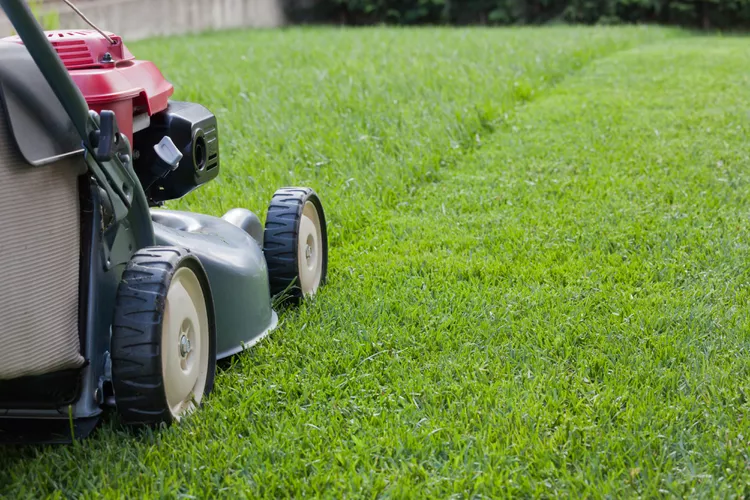
Should you mow today or wait another day? While there isn’t a formula to calculate a mowing calendar, grass provides plenty of cues that help you know when to mow. Whether you use a push mower, rider, or robotic model, timing your mowing right begins with understanding how your grass grows. These tips will help you decide how often you should mow your lawn to result in healthy, lush grass.
1. Know your grass.
Depending on where you live, your lawn consists of cool-season or warm-season grasses. These grasses have different growth patterns and optimal mowing heights that affect when to mow.
Cool-Season Grass
Homeowners in areas with cold winters usually grow cool-season grasses, such as Kentucky bluegrass and tall fescue. Cool-season grasses grow rapidly when temperatures are moderate in spring and fall; they grow slowly in summer and usually go dormant in winter. Kentucky bluegrass and tall fescue are best maintained at about 3 to 3 1/2 inches tall during spring and fall. When they are growing slowly in summer and winter, set the mower height to 4 to 4 ½ inches.
Warm-Season Grass
Areas with moderate winter temperatures usually support warm-season grasses such as Bermudagrass, St. Augustinegrass, and zoysiagrass. Warm-season grasses grow vigorously during the heat of summer. Growth slows, and grasses occasionally go dormant in fall and winter. Bermudagrass and St. Augustinegrass are best maintained at about 1 ½ to 2 inches tall; zoysiagrass grows best when maintained at 1 inch tall.
2. Follow the one-third rule.
Aim to remove no more than one-third of the height of a stand of turf at a time. For example, if your lawn mower is set to cut grass to 3 ½ inches tall, mow when the grass is about 5 inches tall. Reducing the turf’s height by only one-third moderates the stress on the plants, leaving behind plenty of living leaf tissue to support healthy stem and root growth. Following the one-third rule also creates small clippings that quickly decompose, adding nutrients to the soil.
When lawn grass is actively growing, you’ll likely mow every five to seven days to remove one-third of the grass’s height. During periods of slow growth, it is common to mow just once every 10 to 14 days, and many grasses go dormant for weeks at a time. Dormant grasses are not actively growing and don’t need to be mowed.
3. Take advantage of tall mowing heights.
Set your mower deck at the upper end of the recommended maintenance height for the turf grass in your yard. Taller turf requires less frequent mowing. It also has a deeper root system, making it better able to weather adversity than grass that is routinely cut excessively short. Tall turf is more tolerant of drought, heat, traffic, shade, and pests.
4. Beware of cutting grass too short.
It is tempting to lower the mowing height to postpone a future cutting, but don’t take a shortcut. An excessively short cutting height for any lawn grass is a stressor that makes the turf more susceptible to pests, diseases, and drought.
5. Watch for dormancy.
There’s no need to mow dormant turf grass. Warm-season grasses typically go into dormancy in late fall through winter. Cool-season grasses have a main period of dormancy in winter and occasionally a short period of dormancy in summer when your lawn may turn brown.
6. Adjust mowing frequency and height during stressful times.
Periods of drought or temperature extremes can stress lawn grass, causing it to grow slowly. Care well for the turf by increasing the mowing height by ½ to 1 inch and mowing less frequently. Continue to follow the one-third rule.
7. Watch the forecast.
Sometimes, the forecast determines the timing of your next mowing. For example, if the grass is close to mowing height to follow the one-third rule, but rain is in the forecast for the next couple of days, it is best to mow right away rather than wait until after the rain period when the grass could be excessively long.
8. Don't overdo water and fertilizer.
Grass growth is fueled by available soil nutrients, sunlight, and water that can supercharge grass growth. Fast growth leads to frequent mowing.
Water and fertilize thoughtfully to slow your lawn’s growth while not compromising its health. Most turf species need no more than 1 inch of water a week to grow well. Adjust your irrigation system as needed. Fertilizing requirements are site-specific, but some sites require no fertilizer to produce a healthy lawn.