
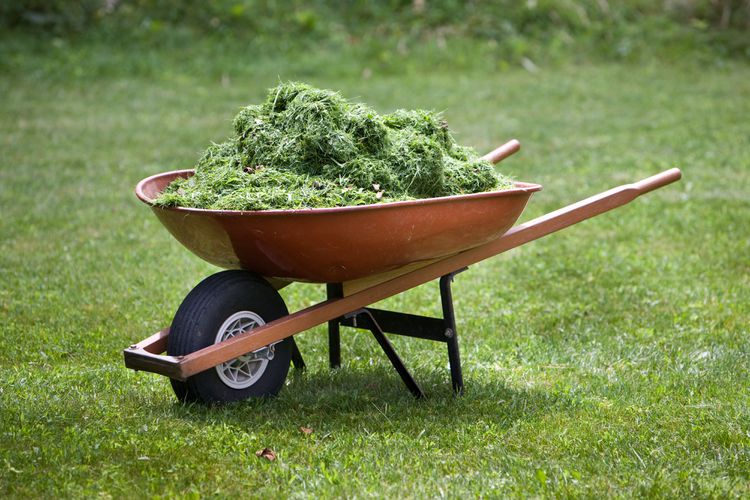
If mowing, collecting, and discarding clippings is your routine, it’s time to change your lawn care practices. What to do with grass clippings instead? Clippings from healthy turf grass are loaded with nutrients that are useful in vegetable gardens and perennial borders, a compost pile, and even the lawn itself. Here are three easy ways to use grass clippings to give your lawn and garden a boost.
1. Leave Clippings on the Lawn
Let grass clippings fall where they are cut, returning valuable nutrients to the soil. Grass clippings consist of water and easy-to-decompose compounds. They filter into the turf and break down in a few weeks, adding nitrogen and other nutrients to the soil in the process.
Homeowners who bag and discard clippings and then fertilize their lawns find that the turf requires notably less fertilizer when clippings are left in place. Be mindful of fertilizer quantities, especially if you previously were removing clippings, and are now leaving them on the lawn. Overfertilization can burn grass and cause a multitude of turf problems, so plan to reduce fertilizer rates accordingly.
Lawn-friendly clippings are short; clippings that are 1 inch long or less decompose best in the grass and soil profile. Cut your lawn regularly to produce consistently short clippings. Mow when the grass is dry to prevent the clippings from clumping on top of the grass. Piles of wet grass clippings take longer to decompose, might harm the grass growing below them, and are unsightly.
Note that if your lawn has disease issues, such as leaf spot, rust, or dollar spot, leaving clippings is not a good idea. Instead, bag them for yard waste pick up or collect and bury the diseased clippings in an out-of-the-way place in the landscape. They will decompose, and any disease spores on the leaves wont be able to cause new infections.
Myth: Grass Clippings Cause Thatch
You may have heard that grass clippings can pile up on the soil surface to create a lawn-destructive layer of thatch. This rumor is false—grass clippings decompose too fast to build up on the soil surface. Thatch is caused by excessive nitrogen fertilization, infrequent mowing, vigorous grass varieties, and unhealthy soil.
2. Use Grass Clippings as Mulch
Another thing you can do with grass clippings is use them as mulch that will help reduce weeds, conserve soil moisture, and moderate soil temperature. Grass clippings make excellent mulch around all types of plants. They break down quickly, improving the nutrient content and structure of the soil as they decompose. Because they break down so fast, be prepared to spread another layer of grass-clipping mulch about eight weeks after the first application to provide continued weed suppression.
Vegetable gardens are great places to use grass clippings as mulch. The fine mulch is easy to spread around young, tender seedlings. It breaks down throughout the season, improving the soil structure and creating an excellent seedbed for next year’s vegetable garden.
Spread a 2-inch-thick layer of dry grass clippings over the soil surface. A thicker layer can limit water and oxygen from getting into the soil.
Don’t use clippings from a lawn recently treated with a broadleaf herbicide as mulch. The herbicide may leach from the grass blades and harm nearby plants.
3. Add Grass Clippings to Compost
When combined with brown material, such as dried leaves, stems, and plant parts, grass clippings turn into nutrient-rich compost. Also known as black gold, compost is valuable all over the landscape. Improve soil structure by mixing a 2-inch-thick layer of compost into garden soil. Suppress weeds by spreading a 2-inch-thick layer of compost around perennials in spring. The compost will also add nutrients that help feed your plants through the season.
Make a simple compost pile by alternating layers of green material—grass clippings—with layers of brown material. Maintain equal amounts of brown and green additives to keep a compost pile healthy and productive. Speed up decomposition by building the pile in a full sun location and turning it every week or so. Because most home compost bins don't reach a high enough temperature to kill pathogens or seeds, don't add grass clippings from a diseased or weedy lawn.
Aim to mow the grass regularly, cutting off just an inch or so of grass to create clippings that will break down quickly in your compost bin.